

Have you ever imagined a digital diary that changes how you trust money? Picture every transaction as a page in a book, clearly linked so that any change is obvious. That's exactly what blockchain does. It works like a secure ledger that records every digital exchange without needing a middleman. In this post, we chat about what blockchain is and how it works in simple, everyday language, giving you a clear look at how secure transactions are becoming a reality for everyone.
Blockchain Defined: Core Concept and How Blockchain Works

Blockchain is like a digital diary where every transaction is written down for all to see. Every time someone sends cryptocurrency or another digital asset, the transaction gets added as a new “page” in this diary. Each page, or block, carries its own unique code (called a cryptographic hash) that links it to the one before, making it clear if anyone tries to change its story.
Each block also includes important details like when the transaction happened and a reference to the block that came before it. This setup makes it almost impossible to tamper without everyone noticing. Because of this built-in security, there's no need for middlemen like banks when moving assets online.
The idea of blockchain was introduced by Satoshi Nakamoto in 2008, and it laid the groundwork for digital currencies like Bitcoin and Ethereum. Its design lets people anywhere in the world make secure transactions directly, simplifying complex transfers while boosting security. Think of it as a modern way to keep a trustworthy record of your digital dealings, clearing the path for future innovations in secure communication and value exchange.
Blockchain Architecture: Blocks, Chains, and Network Structure

Blockchain architecture works like a chain of secure boxes. Each box, called a block, holds a bunch of transactions, a record of when they happened, and a special code from the block before it. This code links the blocks together, forming a chain that hardly anyone can change without setting off alarms. Think of each block as a locked container that only opens when its seal matches the one before it.
Instead of keeping all the information in one spot, the ledger is shared across many computers in a network. Each computer, or node, has its own copy of the entire chain. This means that if someone tries to change one copy, the other copies can spot the mistake and fix it. This system helps everyone trust that the information is true and secure.
- Every block holds a group of transactions, the time they happened, and a code from the previous block.
- The magic of cryptography makes sure any unwanted change breaks the chain right away.
- Each node keeps an exact copy of the ledger, so the network can quickly catch and fix any errors.
Because of this setup, once data is added to the blockchain, it stays safe and unchanged. This makes the whole system trustworthy and secure for everyone.
Consensus Mechanisms in Blockchain Networks
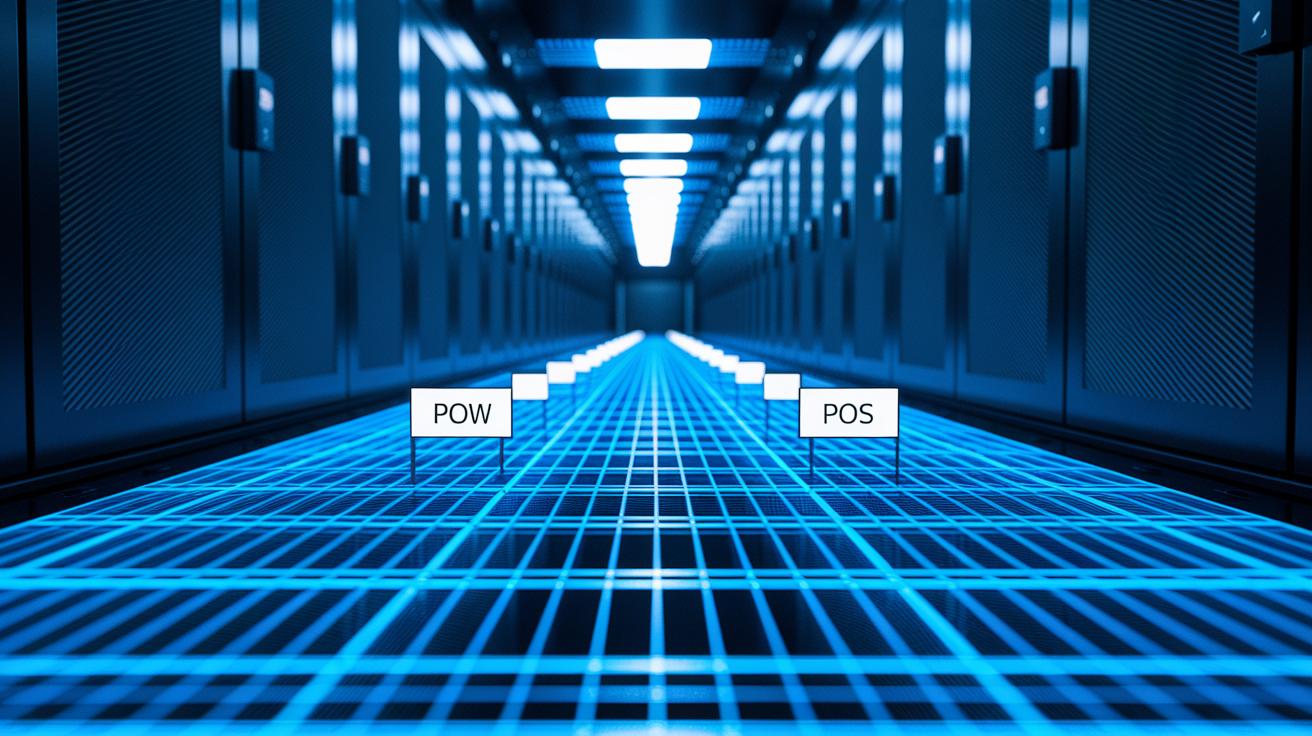
Blockchain networks use simple rules so that every computer agrees on which transactions are legit. In Proof-of-Work, miners compete to solve tricky puzzles. A miner once solved a puzzle in just under ten minutes, showing that even tough challenges can be cracked quickly. This process not only verifies transactions but also keeps the blockchain very secure.
Proof-of-Stake works in a different way. Instead of racing through puzzles, validators are picked based on how many coins they own. In other words, the more cryptocurrency you hold, the higher your chance of being chosen to add the next block. This approach uses much less energy.
All computers, or nodes, in the network work together to check the ledger without needing a central authority. If anyone tries to change a block, its hash changes and the network catches it immediately.
| Proof-of-Work | Proof-of-Stake |
|---|---|
| Uses complex puzzles to secure the chain. | Selects validators based on their coin holdings. |
| Breaks if block data is tampered with. | Any change in block data is quickly detected. |
| Ensures every transaction is visible for transparency. | Ensures every transaction stays secure and decentralized. |
Every consensus mechanism plays a key role. They keep the network safe and make sure all transactions are open and trustworthy.
Programmable Blockchain: Smart Contracts and Decentralized Apps

Smart contracts are pieces of code saved on the blockchain that kick into action when certain conditions are met. They run all by themselves and make sure every term of an agreement is followed exactly as planned. Imagine getting paid automatically once your package arrives; the code handles everything without any extra help.
Ethereum was one of the first to use smart contracts, opening the door for developers to create decentralized apps, or dApps. These apps work on networks where no single server is in charge, and every move gets recorded on the blockchain. This design not only boosts transparency but also makes sure that every recorded action stays secure and unchangeable.
Tokenization is another neat feature of programmable blockchain. It turns real-world items into digital tokens that live on the blockchain. These tokens can represent many kinds of value, from money to property or even art. Picture your event ticket becoming a digital token that’s simple to verify and trade.
| Feature | Benefit |
|---|---|
| Smart Contracts | Automatically enforce agreements without middlemen |
| dApps | Operate on secure, peer-to-peer networks without a central server |
| Tokenization | Converts physical assets into secure digital tokens |
Together, these features expand how we use blockchain. They offer fresh ways to manage digital assets, opening up new opportunities for everyday transactions and interactions in the world of digital finance.
Blockchain Use Cases: Finance, Supply Chain, Healthcare, and Voting

Blockchain is changing our everyday routines in surprising ways. In finance, it lets you send cryptocurrency across borders without needing a bank. Imagine sending money overseas without any fees, it’s like having your very own error-free money machine.
The supply chain is getting a boost too. Every step a product takes, from its creation to ending up in your local store, is recorded clearly so nothing can be altered. Think of a shipment of fresh produce you can trace from the farm right to your market, ensuring everything stayed safe along the journey.
| Benefit | Description |
|---|---|
| Transparent Tracking | Every move is recorded for full visibility. |
| Lower Costs & Speed | Less expense and faster processing from start to finish. |
In healthcare, blockchain is a game-changer as well. By securely storing patient records, it cuts down on mistakes and keeps important details safe. Picture a doctor getting immediate access to a digital record where each entry from past visits is exactly as it should be.
| Advantage | Benefit |
|---|---|
| Secure Records | Patient data stays unchangeable and safe. |
| Fast Information Access | Doctors retrieve complete medical histories quickly. |
Voting systems could see a big improvement too. Blockchain provides a way to record votes that stops tampering and makes it easy to check results. Some companies are already trying out live trials where votes get instantly validated as secure. This could mean voting processes that feel more trustworthy for everyone involved.
These examples show that blockchain isn’t just a digital trend, it’s a powerful tool reshaping finance, supply chains, healthcare, and voting for a more secure and transparent future.
Benefits and Challenges of Blockchain Technology

Blockchain is a digital system that keeps transactions safe and easy to check. Imagine it as a simple ledger everyone can see, making it really hard for anyone to change things secretly. For example, it’s like sending money directly without a bank, you rely only on trust.
- Enhanced security: Many computers check every transaction, so any changes are caught quickly.
- Transparency: Every step stays open for review, cutting down on mistakes.
- No middlemen: Direct exchanges mean you don’t need a third party, which helps lower risks.
Yet, blockchain has its own hurdles. Scalability can be a real issue. When lots of transactions happen at once, the system may slow down, making transfers less speedy.
Another drawback is high energy use. Networks that use Proof-of-Work (a method where computers solve puzzles to verify transactions) often consume a lot of power, which can hurt the environment. Plus, rules and guidelines are still in development because lawmakers are figuring out how best to manage these systems. These uncertainties can sometimes slow down progress.
Even though blockchain boosts security and openness, challenges like scaling up, high energy demands, and ever-changing regulations show that while the technology is promising, it still has some growing pains to work through.
Future Trends in Blockchain and Emerging Innovations

Experts believe blockchain will have an impact similar to how simple HTML transformed the early web. Back then, a little code changed everything. Now, blockchain promises to make digital transactions safe and straightforward. It’s even starting to mix with artificial intelligence, generative models, and the Internet of Things. These connections are opening new doors with practical uses.
New kinds of blockchain networks are also popping up. Businesses are now using private and permissioned networks to keep their data secure while enjoying the benefits of blockchain. Developers are working on ways for different blockchains to share information easily. Think of it like various gadgets syncing up to share your favorite tunes.
Many experts predict that blockchain will soon be a part of everyday finance. Imagine sending money across the world in seconds or confirming digital identities in no time. These ideas hint at a future where blockchain skills reach far beyond our digital wallets and everyday transactions.
- Integration with AI and IoT
- Development of private blockchain networks
- Steps toward seamless interconnectivity between chains
- Broader adoption in everyday financial and identity systems
Final Words
In the action, we explored the basics of blockchain, focusing on how blocks connect with cryptography and build a secure, transparent ledger. We walked through consensus methods like mining and staking, and how smart contracts power decentralized apps across finance, healthcare, supply chains, and voting. The post balanced blockchain's strengths with its challenges while hinting at future innovations in digital finance. Embrace what is blockchain as a foundation for smarter, safer investment choices and a more secure financial future.
FAQ
Q: What is blockchain technology, in simple words and in cryptocurrency?
A: The term blockchain refers to a digital ledger that uses linked blocks to securely record transactions. It underpins digital currencies and lets users transfer assets directly without a middleman.
Q: What is blockchain and how does it work?
A: The blockchain operates by packaging transactions into blocks, linking them with cryptographic hashes, and sharing them across a network. This creates a secure, transparent record that everyone can verify.
Q: What are the types of blockchain?
A: Blockchains come in public, private, and consortium forms. Public blockchains allow open access, while private and consortium blockchains restrict access to selected users.
Q: What is an example of blockchain?
A: A well-known example of blockchain is Bitcoin, a digital currency that uses a secure ledger to record transactions without a central bank or authority.
Q: What is blockchain mining?
A: Blockchain mining involves solving complex puzzles to add new transaction blocks to the chain. This process verifies transactions and secures the network, especially in proof-of-work systems.
Q: What is blockchain in the supply chain?
A: In supply chain management, blockchain provides a secure, transparent ledger to track goods as they move through production and delivery, ensuring data integrity at every step.
Q: Is blockchain a good or bad thing?
A: Blockchain is generally seen as beneficial given its transparency and security, though it faces challenges like scalability and energy use, especially in systems relying on proof-of-work.
Q: How does blockchain compare to Bitcoin?
A: Blockchain is the technology behind secure, decentralized records, while Bitcoin is a digital currency that uses this technology to record financial transactions.
Q: What is Blockchain.com?
A: Blockchain.com is a platform offering digital wallet services and a cryptocurrency exchange, making it easier for users to manage, send, and receive digital currencies.
Q: What is Ethereum?
A: Ethereum is a blockchain platform known for smart contracts that automatically execute agreements. It enables developers to create decentralized applications and manage tokenized assets.
Q: What is Ledger?
A: Ledger is a hardware wallet designed to store cryptocurrencies offline, keeping your private keys secure from online threats through physical device protection.
Q: What is Coinbase?
A: Coinbase is a cryptocurrency exchange that provides a user-friendly way to buy, sell, and manage digital assets, serving as an entry point for many new crypto investors.
Q: What is Binance?
A: Binance is a global digital asset exchange offering a variety of trading options, including spot and futures markets, to help users manage and trade cryptocurrencies.
Q: What is Solana?
A: Solana is a blockchain network that emphasizes fast transaction speeds and low fees, making it a popular choice for developers building decentralized applications.