

Have you ever wondered if a portfolio management certificate might change your career? A lot of professionals say it sharpens their skills and opens doors they never thought possible.
Think of it as a turning point, it helps boost your decision-making and growing strategy. Certifications like PfMP and MoP give you an edge while climbing the career ladder.
If you’re ready to lead with more confidence and take control of your future, this guide will show you how these programs can boost your career and help you reach new heights.
Portfolio Management Certification Elevates Career Growth

If you want to sharpen your professional skills and move up at work, these certifications can light the way. I’ve seen many professionals take these steps, and it really makes a difference.
Consider the PfMP certification by PMI. This program asks for eight years of portfolio management experience and includes a four-hour exam with 170 multiple-choice questions that cover topics like strategic alignment and governance. Fun fact: many top portfolio managers say earning this certification was a turning point that opened doors to senior roles.
MoP comes in two levels: Foundation and Practitioner. It guides you through decision-making by using trusted frameworks such as PRINCE2 and MSP. Likewise, the Managing Portfolios certification from APMG offers an online exam that focuses on key ideas like principles, governance, design, and delivery.
For those working in agile environments, the ICP-LPM by ICAgile zeroes in on agile portfolio management, lean budgeting, and resource allocation, perfect skills for today’s fast-paced business world. And if you’re looking for a quick test of your expertise, consider the PfM² certification by PM² Alliance, which features a 45-minute exam with 50 questions and works best if you already hold a PM² certification.
All of these programs cover the basics of portfolio management while also offering advanced insights. They are great for anyone who wants to climb the career ladder and lead with confidence.
Portfolio Management Certification Eligibility and Prerequisites

To earn the PfMP certification, you need to show at least 96 months of portfolio management experience within the past 15 years, along with documented project or program hours related to your education. Imagine it like having spent years in the real world building and managing portfolios, proving you have hands-on expertise.
For those interested in MoP, the Foundation level is open to anyone, while the Practitioner level requires that you first pass the Foundation exam. Similarly, APMG’s Managing Portfolios only asks you to pass its Foundation exam. Think of these exams as stepping stones that build your confidence for handling bigger strategic tasks.
For ICP-LPM, a basic understanding of agile principles is all that’s needed, no formal certification is required to begin. And finally, PfM² expects candidates to have PM² Certification along with related training. These varied paths show how your past experiences can pave the way for promising leadership in portfolio management.
Portfolio Management Certification Exam Structure and Requirements

Portfolio management exams let you show what you really know while matching different career paths. Each test is set up to check both your technical skills and whether you’re ready for more senior roles.
PfMP measures your strategic ability with 170 multiple-choice questions spread across five areas, all in a 4-hour timeframe.
PfM² is a quick, focused exam with 50 questions where you need to get at least 35 correct in 45 minutes. Imagine a manager quickly shifting strategies during a sudden market change, that’s the kind of insight this exam taps into.
MoP comes in two levels. The Foundation level is a 75-minute test built on objective questions meant to strengthen your basic decision-making skills. The Practitioner level is longer, at 2.5 hours, and uses real-life scenarios to see how well you handle strategic thinking when the stakes are high.
Managing Portfolios by APMG uses an online, timed multiple-choice format that sticks strictly to testing rules. Meanwhile, ICP-LPM checks your abilities through learning milestones and hands-on tasks.
| Exam | Format | Duration | Key Details |
|---|---|---|---|
| PfMP | MCQ | 4 hours | 170 questions; 5 domains |
| PfM² | MCQ | 45 minutes | 50 questions; 35 correct required |
| MoP Foundation | Objective | 75 minutes | Basic decision-making focus |
| MoP Practitioner | Scenario-based MCQ | 2.5 hours | Real-life strategic scenarios |
| Managing Portfolios (APMG) | Online MCQ | Timed | Strict testing guidelines |
| ICP-LPM | Milestones & Tasks | N/A | Competency-driven assessment |
• Every exam has a unique focus on portfolio management.
• Your choice of exam can reflect your testing style and give a glimpse into your future career growth.
Portfolio Management Certification Course Curriculum and Training Formats

Traditional Classroom Training is a two-day bootcamp where you work through every exam topic. It’s set up like a hands-on workshop with lots of group exercises and real-time feedback from a skilled instructor. Picture joining your peers in a lively session where challenging portfolio case studies suddenly become clear through interactive group work.
Live Virtual Training gives you a flexible option through three 4-hour Zoom sessions. In these online sessions, you dive into case studies and get answers to your questions, all while feeling the energy of a real classroom. It’s a bit like watching a live sports game where quick decisions and smart strategy keep you on your toes, all from the comfort of your home.
Ultra Live Virtual Training brings together the best of live classes and self-paced review. With two live sessions of two hours each and additional pre-recorded lectures, you get to ask questions in real time and later review important lessons at your own pace. Imagine it as a hybrid workshop: you catch live interactions and then revisit key points like watching your favorite tutorial again to catch what you missed.
Pre-Recorded Training is perfect if you prefer to learn at your own speed. Starting at $499, it includes video lectures and handy downloadable resources. These modules use real portfolio case studies, simple budgeting exercises, and clear governance frameworks. It’s an easy-to-access option for busy professionals who need flexibility and control over their study schedule.
Portfolio Management Certification Costs and Investment Analysis

When you're checking out certification costs, it helps to break things down into training fees and exam fees. For instance, the PfMP Pre-Recorded Training comes in at $499, making it a budget-friendly option. If you prefer live sessions or classroom bootcamps, you'll typically pay between $1,200 and $2,500 for that extra hands-on learning and real-time interaction.
Exam costs can also change a lot. The PMI PfMP exam costs $800 for members and $1,000 for non-members. Meanwhile, the MoP exam runs about £300 for the Foundation level and £400 for the Practitioner level, though prices may vary by region. The Managing Portfolios exam from APMG is roughly £150, and the ICP-LPM agile portfolio course starts at $995.
| Program | Cost |
|---|---|
| PfMP Pre-Recorded Training | $499 |
| Live/Classroom Bootcamps | $1,200–$2,500 |
| PMI PfMP Exam | $800 (members) / $1,000 (non-members) |
| MoP Exam | £300–£400 |
| Managing Portfolios (APMG) | ~£150 |
| ICP-LPM | $995+ |
Understanding these costs can help you plan your budget and feel confident about the return on your investment.
Comparing Portfolio Management Certification Options

When you’re choosing a portfolio management certification, it’s smart to look at things like exam style, prerequisites, training costs, and who the certification is made for. These certifications have their own flavor, ranging from basic frameworks to deeper strategic insights that help you manage portfolios.
For example, the MoP Foundation & Practitioner by AXELOS is a solid choice if you’re new to portfolio management. It mixes multiple-choice questions with scenario-based tests to help you make strategic decisions. On the other hand, Managing Portfolios from APMG offers a straightforward governance structure with minimal prerequisites, making it great for those who prefer practical, exam-based learning.
If you’re already an agile practitioner and want to move into portfolio management, the ICP-LPM certification from ICAgile might be your best bet. Its assessment-based format checks not only your agile fundamentals but also lean budgeting and resource allocation skills. Then there’s the PfM² certification by PM² Alliance, tailor-made for professionals who already have a PM² background, with a quick 45-minute exam that tests your problem-solving and portfolio strategy skills.
For those with a long history in portfolio management, the PfMP from PMI is designed to challenge seasoned experts. Its extensive exam, featuring 170 questions over four hours, validates deep industry experience. Looking at these different paths side by side can help you decide which one fits your career stage and goals best.
| Certification | Provider | Prerequisites | Exam Format & Duration | Training Cost Range | Ideal Candidate |
|---|---|---|---|---|---|
| MoP Foundation & Practitioner | AXELOS | None / Foundation | MCQ: 75 min / 2.5 hrs | £300–£400 | Strategic decision-makers new to portfolios |
| Managing Portfolios | APMG | None beyond Foundation | Online MCQ (timed) | £150 | Managers seeking governance framework |
| ICP-LPM | ICAgile | Agile fundamentals recommended | Assessment-based | $995+ | Agile practitioners moving to portfolios |
| PfM² | PM² Alliance | PM² Certification | MCQ: 45 min | Free–£200 | PM² users transitioning to portfolios |
| PfMP | PMI | 96 months exp. | MCQ: 170 Q / 4 hrs | $800–$1,000 | Seasoned portfolio managers |
Each option brings its own strengths to the table, helping you boost your portfolio management skills and build lasting professional credibility.
Portfolio Management Certification Study Resources and Preparation Strategies

Get ready for your exam by using a range of smart study tools built for future portfolio management leaders. For instance, when you’re planning your study schedule, think about this idea: some experts first mastered hundreds of practice questions before they became pros. That same approach is at the heart of the PfMP materials, which include a huge library of 1,700 practice questions plus 780 do-it-yourself questions.
You can also build your confidence with the PfMP Exam Simulator. It challenges you to reach an 85% score on two back-to-back practice tests. These sessions feel a lot like the real exam, so you get the perfect practice to sharpen your skills.
There’s more support too. The PfMP Readiness Assessment, along with a friendly LinkedIn group of over 700 portfolio professionals, offers useful tips and proven insights. You’ll also find handy review guides like “The Sensible Guide to Passing the PfMP Exam” and texts aligned with PMI standards to help you deepen your understanding.
- Free PMI portfolio management guides give you extra practice
- Online free portfolio courses and community study groups let you learn with peers
- Certification review materials and sample outlines from MoP and APMG add more variety to your study plan
These resources set you up with a solid base to polish your skills and boost your confidence for the big exam day.
Portfolio Management Certification Career Benefits and Salary Outcomes
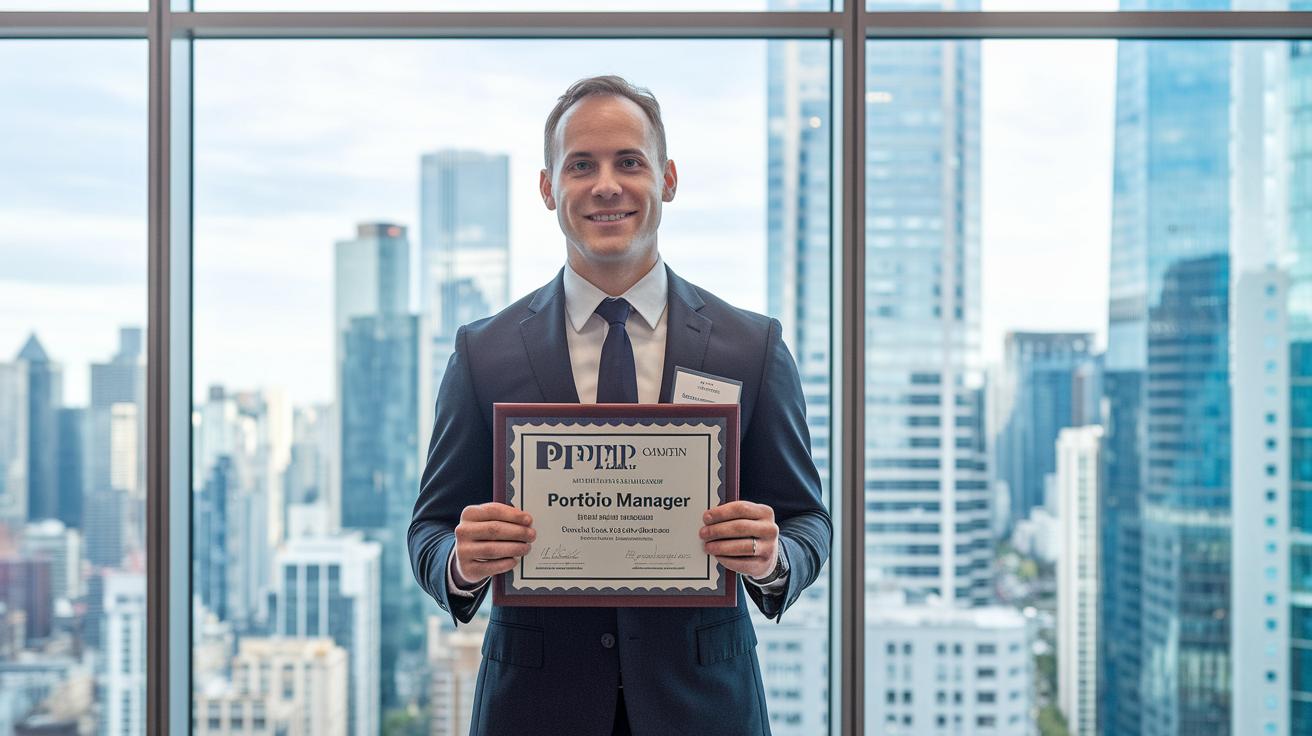
Portfolio management certifications like PfMP, MoP, and ICP-LPM show that you know how to match projects with business goals. They help you land roles like Portfolio Director, PMO Lead, or Portfolio Consultant. Earning these credentials tells employers you have top-notch skills, which can boost your paycheck, many certified folks earn six figures. Big names like J.P. Morgan and top hedge funds often start salaries above $130,000. For example, one manager shared that once he got his PfMP, he moved into a leadership role at a major firm, earning more money and gaining recognition all around.
Remote and contract work in portfolio management is growing too, up by 25% in the last two years. This change gives you more room to design a work life that fits your style. These certifications not only raise your earning potential but also widen your career choices, whether you want to climb the corporate ladder or try something new. Places like California offer competitive pay for portfolio analysts, and the benefits reach into fast-moving companies and consulting gigs in both the public and private sectors.
| Benefit | Description |
|---|---|
| Broader career paths | Your expertise opens many doors |
| Enhanced salary | Top firms often offer impressive pay |
| Flexible work options | Growth in remote and contract roles |
By boosting your professional profile with these certifications, you set yourself up for stronger paychecks and more career opportunities in portfolio management.
Final Words
In the action of evaluating top portfolio management certification programs, you’ve seen how each option covers key topics like eligibility, exam formats, cost analysis, and study tools. Small snapshots of course curriculums and practical preparation tips add both clarity and depth to your decision-making. Each certification paves the path toward smarter, secure investments and greater career opportunities. Embracing these insights may just lead you to the perfect portfolio management certification that supports your financial goals, driving you toward a future of promising growth.
FAQ
What portfolio management certification programs are available online?
The portfolio management certification programs available online include MoP® Foundation & Practitioner, Managing Portfolios by APMG, ICP-LPM, PfM², and PfMP®. They offer flexible learning options like live sessions and self-paced modules.
What are the cost options for portfolio management certifications?
Portfolio management certification costs vary. Pre-recorded training can start around $499, while exam fees for credentials like PfMP® typically range from $800 to $1,000. Free study materials are also sometimes available.
Which is the best portfolio management certification?
The best certification depends on your background and goals. Seasoned professionals may prefer PfMP®, while others might choose MoP® or Managing Portfolios for a solid foundation in strategic portfolio oversight.
What does the PFMP certification involve?
The PFMP® certification, offered by PMI, requires 96 months of portfolio experience. Its exam covers strategic alignment, governance, and risk management through 170 multiple-choice questions completed in four hours.
What certification do you need to be a portfolio manager, and how do you become certified?
To be a portfolio manager, many choose certifications like PfMP®, MoP®, or ICP-LPM. Becoming certified involves meeting experience prerequisites, attending training, and passing a structured exam tailored to portfolio oversight.
Do portfolio managers need a CFA certification?
Portfolio managers do not need a CFA certification. Portfolio management credentials, such as PfMP® or MoP®, are designed to build skills in overseeing and aligning portfolios, making them more relevant for this role.
What salary can certified portfolio managers expect?
Certified portfolio managers often earn six-figure salaries, with positions at top organizations starting above $130,000, based on experience, certification level, and the specific demands of their roles.